


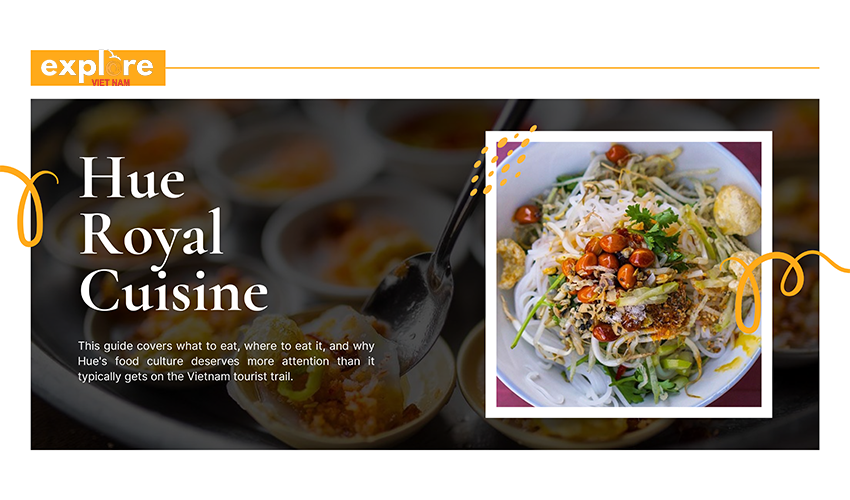
Hue Royal Cuisine: This guide covers what to eat, where to eat it, and why Hue’s food culture deserves more attention than it typically gets on the Vietnam tourist trail.
There are cities in Vietnam where you eat well. Then there is Hue, where eating is a cultural act. The former imperial capital of the Nguyen dynasty sits on the Perfume River in central Vietnam, and its cuisine carries the weight of that history in every dish: elaborate, precise, deeply ceremonial, and unlike anything else in the country.
Hue royal cuisine was developed over centuries to satisfy the standards of an imperial court that demanded both perfection and variety. The emperor was said to eat fifty dishes at a single meal, each one prepared by specialized cooks, each one presented with meticulous attention to color, form, and flavor. That tradition filtered down into the city’s street food, its home cooking, and its restaurant culture, producing a culinary identity so distinct that UNESCO recognized Hue as a Creative City of Gastronomy in 2019.
The Philosophy Behind the Food
Understanding Hue cuisine requires understanding its origins. The Nguyen emperors ruled from Hue between 1802 and 1945, and the imperial kitchen was one of the most sophisticated culinary institutions in Southeast Asia. Cooks were selected from across the country, ingredients were sourced from the finest regional producers, and presentation was considered as important as flavor.
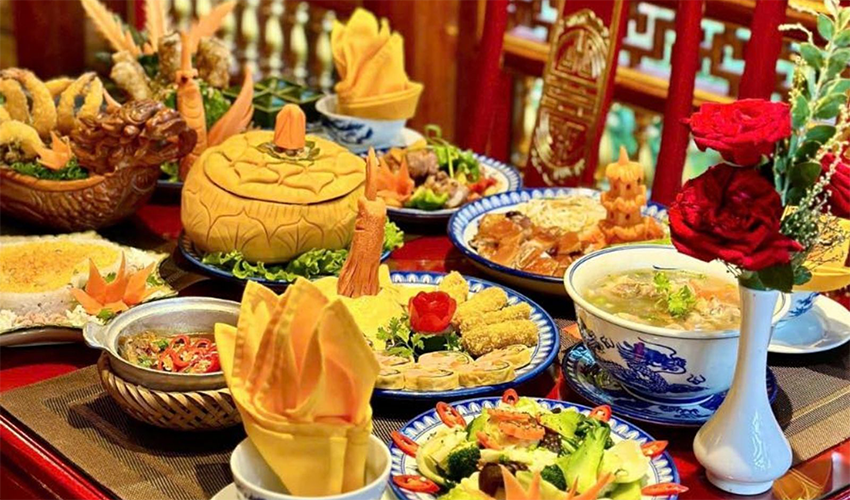
The imperial aesthetic shaped everything. Dishes were made smaller and more refined than their equivalents elsewhere in Vietnam. Colors were used deliberately: purple, yellow, green, and white appearing together on a single plate. Vegetable carvings and edible flowers were standard garnishes. The goal was not just sustenance but beauty, and that goal persists in Hue’s food culture to this day.
The city also has a strong Buddhist culinary tradition. Hue has more pagodas per capita than anywhere in Vietnam, and vegetarian cooking here has been refined over centuries into something genuinely extraordinary. Hue’s vegetarian restaurants produce dishes that replicate the appearance and texture of meat so convincingly that first-time visitors are regularly confused.
Essential Dishes to Try in Hue Royal Cuisine
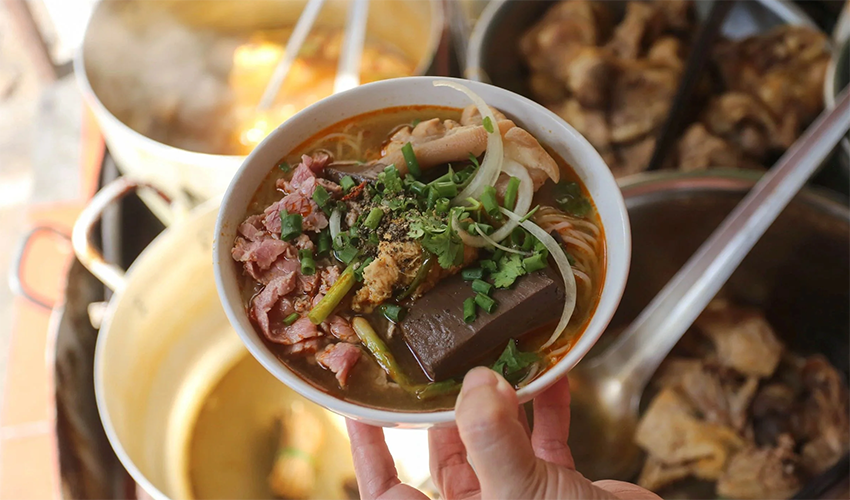
Bun bo Hue is the dish that put the city’s cuisine on the map nationally, and it remains the best argument for Hue food’s superiority over its more famous rivals. A rich, lemongrass-scented broth: deeper and more complex than pho, with a gentle heat from shrimp paste and chilli, holds thick round noodles, sliced beef, pork knuckle, and cubes of congealed pork blood.
The flavor profile is unlike anything else in Vietnamese cooking: savory, fragrant, slightly spicy, with a fermented depth that takes time to fully appreciate. In Hue itself, it is eaten for breakfast, and the best bowls are produced by vendors who have been making the same broth the same way for decades.
- Hue’s Crispy Pancake
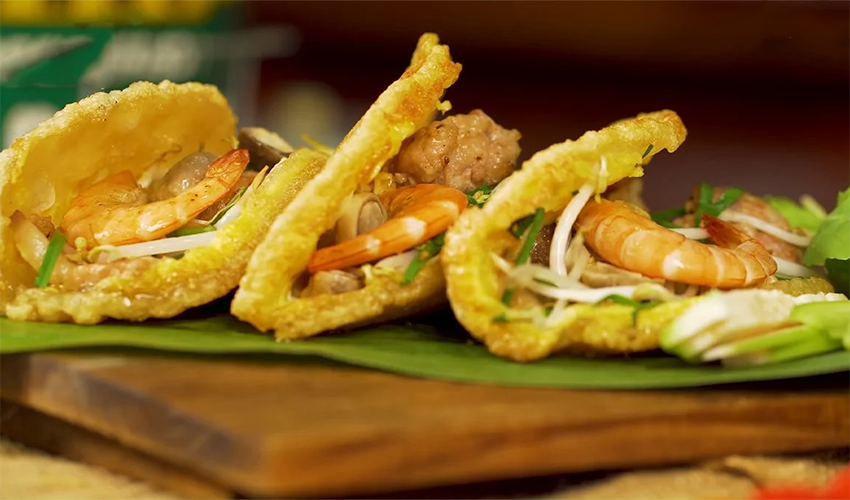
Banh khoai is Hue’s version of the Vietnamese crispy pancake. It is smaller and thicker than the southern banh xeo, filled with shrimp, pork, and bean sprouts, and served with a unique Hue dipping sauce made from fermented soybean paste, peanuts, and sesame. The combination of the crispy shell, the fresh herbs wrapped around each piece, and the rich, nutty sauce is one of the most satisfying eating experiences in the city.
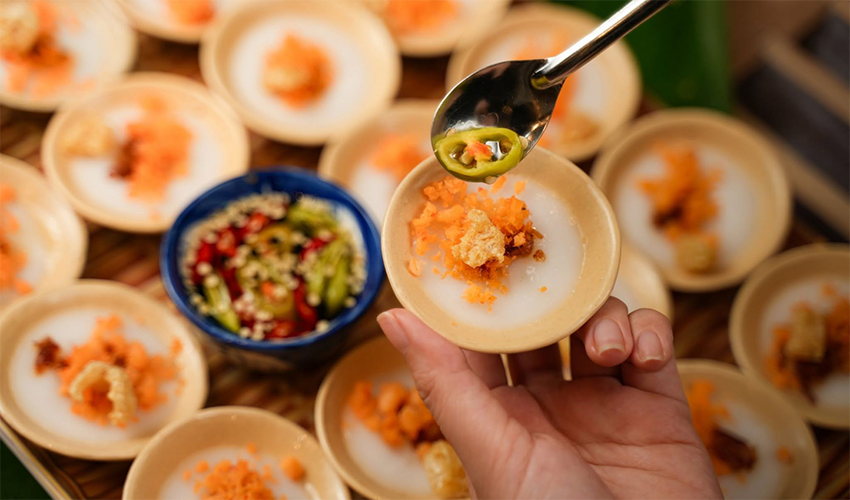
Banh beo are small steamed rice flour cakes served in the shallow ceramic dishes they’re cooked in, topped with dried shrimp, crispy pork crackling, and scallion oil. They arrive in sets of eight or ten, and eating them is a pleasantly repetitive exercise: each one identical, each one perfect in its simplicity.
They look modest and taste anything but. The combination of the soft, slightly elastic rice cake with the savory toppings and the crunch of the crackling is quietly addictive. Banh beo is a snack food in Hue, eaten between meals, and the best versions are found in the city’s residential neighborhoods rather than the tourist center.
- Mussel Rice
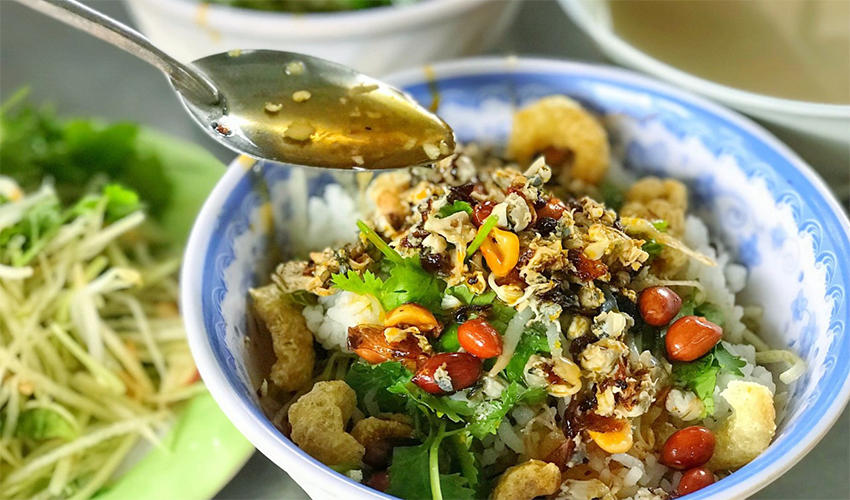
Mussel rice is one of Hue’s most distinctive and least exported dishes. Baby mussels from the Perfume River served over cold rice with a startling array of accompaniments: pork crackling, roasted peanuts, sesame, fresh herbs, chili, fermented shrimp paste, and a small bowl of hot mussel broth on the side.
The dish is assembled by the diner at the table, and the eating is interactive: mixing, adjusting, adding more chili or more herbs according to taste. The flavor is intensely savory and complex, with the fermented shrimp paste providing a depth that takes some getting used to and then becomes completely addictive.
- Royal Set Meals
Several restaurants in Hue offer reconstructed imperial banquets, multi-course meals served in traditional settings with dishes drawn from historical records of the Nguyen court. These are not cheap by Vietnamese standards, but the experience of eating a dozen small, beautifully presented dishes in a restored courtyard house is genuinely unlike anything else in the country.
Explore Vietnam includes royal dining experiences and street food tour on our Hue itineraries. This is worth considering if you want the context and the curation that comes with a guided culinary evening rather than navigating the restaurant scene independently.
Where to Eat Hue Royal Cuisine in Hue City?
– Dong Ba Market is the city’s main market and the best place to eat like a local: banh beo, bun bo Hue, and banh mi vendors operate from early morning, and the atmosphere is as good as the food.
– Hen Island for com hen, best eaten at the small family restaurants that have operated there for generations.
– Vegetarian restaurants around Tu Dam Pagoda for Hue’s extraordinary chay cooking, especially good on the 1st and 15th of each lunar month when Buddhist practice means the city’s vegetarian options multiply significantly.

Best Time to Visit for Food
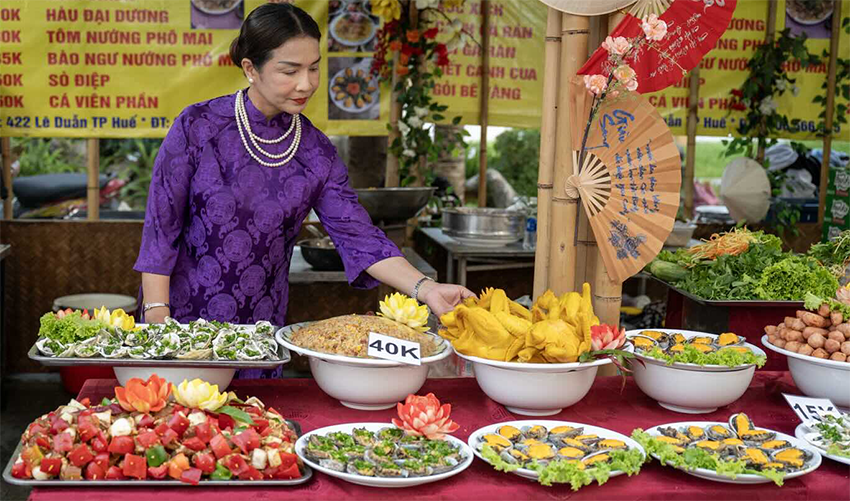
Hue’s food culture peaks during the Hue Festival, when the city hosts cooking demonstrations, royal banquet reconstructions, and food markets that draw chefs and food writers from across Vietnam and beyond.
Outside of festival years, the food is excellent year-round, but April/September in Hue is a particularly good time to eat well.
Why Hue Food Matters?
Hue cuisine is the most formally developed food culture in Vietnam, the product of imperial ambition, Buddhist discipline, and centuries of refinement in a city that took cooking seriously as an art form. It is also, paradoxically, some of the most affordable food in the country, the same dishes that graced the emperor’s table are available for a few thousand dong from a street vendor outside Dong Ba Market.
That combination of historical depth and everyday accessibility is what makes eating in Hue one of the most rewarding food experiences in Southeast Asia. Come hungry, come curious, and come with time to sit and eat slowly. The city will do the rest.