





Meta Description:
Discover the 10 best dishes to eat in Hue, Vietnam, plus where to try them and how Explore Vietnam can take you there.
Top 10 Must-Try Local Dishes in Hue
Hue is famous for its Imperial City, royal tombs, and the slow, misty flow of the Perfume River. But spend a few days here and you’ll quickly notice something else: this former royal capital takes its food as seriously as its history. Centuries of feeding emperors, mandarins, and their courts left Hue with one of the most refined and varied food cultures in Vietnam, split between elaborate “royal cuisine” once reserved for the palace and humble, punchy street food eaten by everyone else.
Hue is often called Vietnam’s culinary capital in the same breath as Hoi An and Hanoi, and with good reason: it’s home to hundreds of distinct dishes, many found nowhere else in the country. Below is our local guide to the 10 local dishes worth building a day around: where they come from, what makes them special, and exactly where to try them.
- Bún Bò Huế (Hue Spicy Beef Noodle Soup) – Hue Food Tour
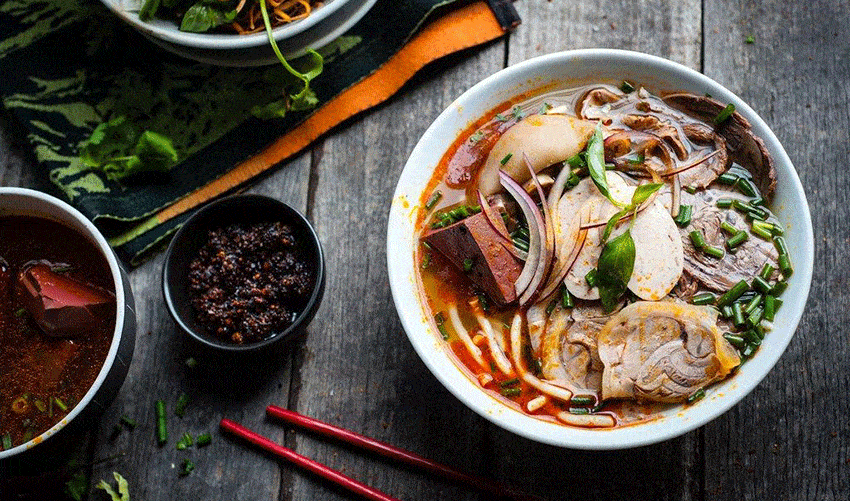
If you eat only one dish in Hue, make it this one. It is the city’s most famous export, a fiery, deeply aromatic noodle soup built on a beef and pork-bone broth simmered with lemongrass, chili oil, and fermented shrimp paste. Thick, round rice noodles sit under slices of beef shank, chunks of oxtail, and coins of pork knuckle, with a side of banana blossom, herbs, and lime to balance the heat. Locals will tell you the broth here is spicier and more complex than the versions you’ll find in Saigon or Hanoi.
Where to try it:
- Bún Bò Mụ Rơi – 20 Bạch Đằng
- Bún Bò Bà Nga – 47 Nguyễn Công Trứ, Phú Hội
- Bún Bò Huế Mỹ Tâm – 11A Hà Nội, Vĩnh Ninh (open 24/7 for late-night bowls)
- Bánh Khoái (Hue-Style Crispy Pancake) – Hue Food Tour
Hue also has its own version for “bánh xèo”, but smaller, thinner, and considerably crispier. Rice flour batter tinted yellow with turmeric is poured onto a hot skillet with shrimp, pork, and bean sprouts, then folded in half and fried until the edges shatter. The traditional way to eat it is to tear off a piece, wrap it in rice paper with lettuce and herbs, and dip the whole bundle into a rich, nutty peanut-and-liver sauce. Hue is also the only place in Vietnam that grows the green star fruit traditionally served alongside it.

Where to try it:
- Lạc Thiện – 6 Đinh Tiên Hoàng (a family-run institution since 1954)
- Hạnh Restaurant – 11 Phó Đức Chính
- Cơm Hến (Baby Clam Rice) – Hue Food Tour
A dish born from necessity rather than luxury: “cơm hến” started as cheap, filling food for fishing families on “Cồn Hến”, the small river island where the tiny freshwater clams are still harvested. Cold rice is topped with the clams, their cooking broth, crispy pork crackling, peanuts, sesame, and a mountain of fresh herbs, then finished with shrimp paste and chili to taste. It looks unassuming but delivers an intense mix of textures and flavors in every bite. Locals eat it as a light meal any time of day.
Where to try it:
- Cơm Hến Hoa Đông – 64/7 Ưng Bình
- Nem Lụi (Grilled Lemongrass Pork Skewers) – Hue Food Tour
Minced pork is mixed with fat and seasoning, molded onto lemongrass stalks, and grilled over charcoal until smoky and slightly charred. Diners wrap the skewered meat in rice paper with herbs, star fruit, and green banana, then dip it into a thick, savory peanut-hoisin sauce that’s distinctly Hue in style, thicker and more complex than the versions served further south. It’s often ordered alongside “bánh khoái”, since many restaurants serve the two together.

Where to try it:
- Madam Thu Restaurant – 45 Võ Thị Sáu
- Tai Phu Restaurant – 2 Điện Biên Phủ
- Bánh Bèo, Nậm, Lọc – Hue Food Tour
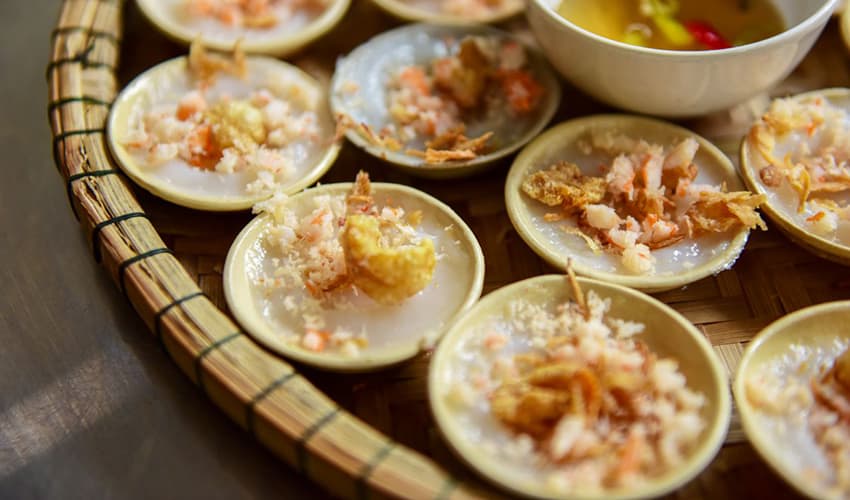
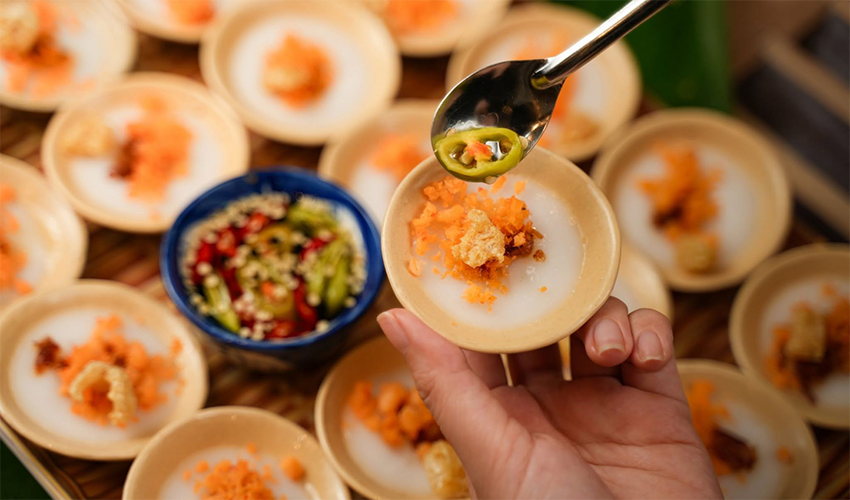
These three steamed rice-flour cakes almost always arrive together on one plate, and each has its own texture and history rooted in royal-era kitchens. “Bánh bèo” are small, saucer-shaped discs of rice flour topped with dried shrimp and crispy pork skin. “Bánh nậm” are flat, soft parcels steamed in banana leaf with a thin layer of shrimp paste. “Bánh lọc” are translucent, chewy dumplings of tapioca flour wrapped around a whole shrimp and pork belly, often served in or out of their banana-leaf wrapping. All three are dipped in a light, sweet fish sauce.

Where to try it:
- Bánh Bèo Bà Cư – 47 Nguyễn Bỉnh Khiêm
- Quán Bánh Bà Chi – 51 Lê Viết Lượng
- Bún Thịt Nướng Huế (Grilled Pork Noodle Salad) – Hue Food Tour
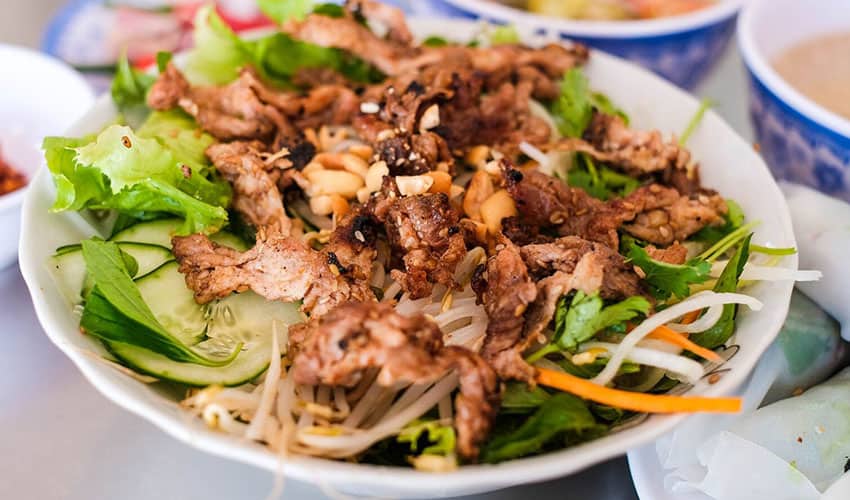
A cooling counterpart to bún bò Huế’s heat. Rice vermicelli is topped with grilled, lemongrass-marinated pork, fresh greens, pickled carrot and daikon, crushed peanuts, and fried shallots, all brought together with a tangy, slightly sweet fish-sauce dressing poured tableside. It’s a lighter option for a hot afternoon and a good introduction to Hue flavors for anyone easing into the spicier dishes on this list.
Where to try it:
- Tai Phu Restaurant – 2 Điện Biên Phủ
- Bánh Canh Nam Phổ (Thick Noodle Crab Soup) – Hue Food Tour
Named for Nam Pho village just outside the city, this dish uses thick, chewy tapioca-rice noodles in a bright orange-red broth made from crab paste and pork. It’s heartier and starchier than “bún bò Huế”, closer to a thick chowder than a clear soup, and typically topped with a fried shrimp-and-pork cake called chả. Locals often eat it as a late-afternoon snack rather than a full meal.
Where to try it:
- Bánh Canh Nam Phổ Thúy – 16 Phạm Hồng Thái
- Chè Huế (Royal Sweet Soups) – Hue Food Tour
No city in Vietnam takes chè as seriously as Hue, where royal-era chefs are said to have developed dozens of distinct varieties, from black sesame and lotus seed to mung bean, taro, and banana in coconut milk. Many Hue chè shops serve a sampler platter so you can try several small cups in one sitting, a good way to experience the range of textures and sweetness levels in one go.

Where to try it:
- Chè Hẻm – 1/29 Hùng Vương
- Chè Mợ Tôn Đích – 3/3 Đinh Tiên Hoàng
- “Hell Rice” Combination Rice – Hue Food Tour
Despite its unsettling name, this is one of Hue’s most cheerful-looking dishes: a mound of white rice topped with a colorful arrangement of grilled pork, shrimp, egg, cucumber, and pickled vegetables, all tossed together with a sweet-savory dressing just before eating. It’s less about any single bold flavor and more about balance, which fits Hue’s reputation for careful, composed cooking.
Where to try it:
- Cơm Âm Phủ – 35 Nguyễn Thái Học
- Hue Fermented Pork Roll – Hue Food Tour
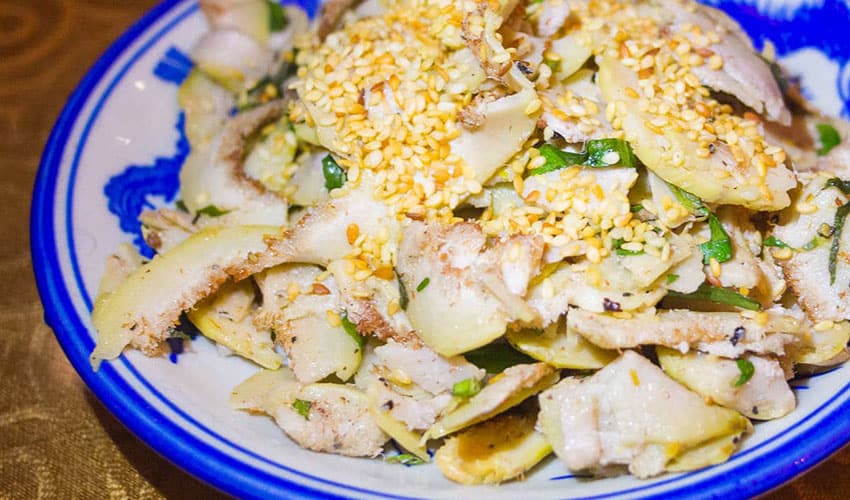
A pungent, tangy snack found at markets and beer stalls across the city. Boiled pork ear, skin, and meat are mixed with roasted rice powder, garlic, and spices, then wrapped tightly in banana leaves and left to ferment for a few days. The result is chewy, sour, and intensely savory, usually torn apart by hand and eaten with rice crackers as a side dish to a cold beer rather than a meal on its own.
Where to try it:
- Dong Ba Market

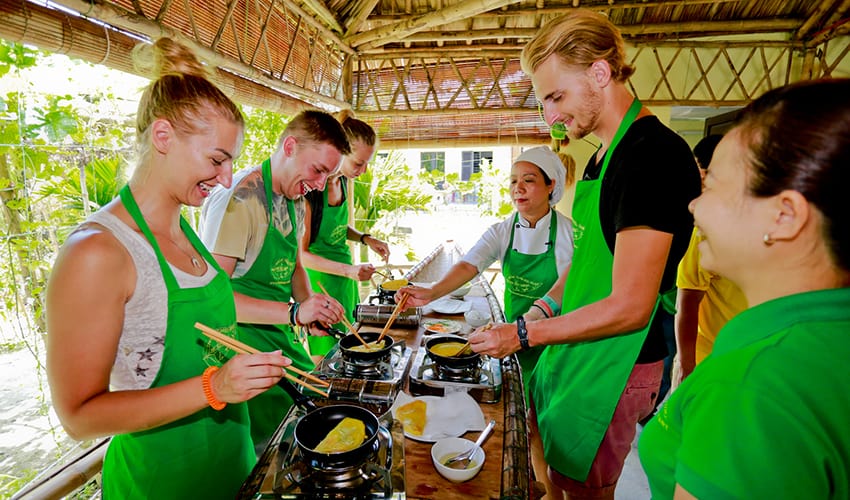
At Explore Vietnam, our half-day and full-day Hue food tours take you to family-run kitchens and market stalls (including several on this list) with a local guide who knows the owners, the history, and the best time of day to visit each stop. We also run hands-on cooking classes where you’ll learn to make Hue local dishes from scratch.
Planning a trip to Hue? Explore Vietnam offers custom itineraries, guided food tours, and cooking classes across the Imperial City and beyond. Contact us to start planning your trip.